MY CHILDHOOD.
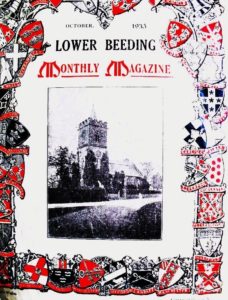
Going way back to my earliest childhood it was my mothers wish that I be christened in St John The Evangelist Church in St Leonard’s Forest just down the road from our house. To do this she had to get the permission from Sir William Scrase Dickens whose family built the church in 1839.Most of the grave stones bear that that name including his 1794 t0 1875.He wrote back saying it would be alright if he did not send a word to the contrary which he didn’t and I was baptized and recorded in the church magazine dated 1935.There were beautiful glass stained windows around the church and quite by chance one of them was a picture of Saint Leonard my middle name opposite the font where I was Christened.
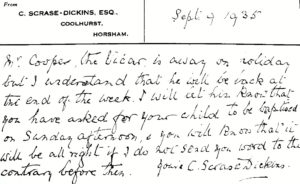
COPY OF ALL BELOW WRITTEN IN LOWER BEADING MAGAZINE 1935.


I was very lucky in my childhood and could do things then which would be impossible today. I just had to walk down the road normally with my dog Mufty to St Leonards forest. I later discovered the forest had a great deal of history going back to 1208 when the Lords of the forest the De Braose family built a chapel dedicated to a French hermit St Leonard who was said to have lived there. After a bloody battle he killed a dragon with Lilies of the Valley growing up where his blood fell. Lilies can still be found in the forest. Another well known legend concerns Mick Miles who is said to have been a smuggler. The devil met him one day and told him his time was up and he must give him his soul. But Mick being a wily old fellow arranged to race old Nick along a straight track and it was agreed that if Mick won he could keep his soul. Mick was the fastest runner. The same track is still there and called Mick Miles Race. During the 15th century there were many entrances to the forest. These were called gates. Today they are now towns ie Faygate, Colgate, Monksgate etc. All this history can be attributed to a book by John Trundle written in 1614.
In the forest there are 3 ponds, Roost Hole was the biggest. Black Bottom aptly named because it was very deep. I would catch large perch. I remember they had a very sweet taste and because we were on Ration Cards during the war it was a nice addition to our diet. The other was Dry Pond aptly named because in summer it would completely drain out into a river. Mufty being a Springer Spaniel loved water and would swim out and catch sticks and sometimes would swim across it. In the fields there were lovely coloured grass snakes some up to 5 feet long. In the forest swamps there were mud piles often with adders on them. I remember my dad being bitten by one when picking primroses in a hedgerow. I also found a field which in season had big horse mushrooms which were delicious and often would fill a dinner plate. I asked the lady owner if I could pick them she agreed as long as I did not disturb her horses.
My dad was in the first world looking after the horses. He spoke little about it but I remember on one occasion him telling me that an Officer once told him to take great care of them because they were very hard to come by whereas men could easily be replaced. During the second world war he was an Air Raid Warden and that was written on our front door. All our windows were covered in tape to stop them from smashing if any bombs fell. At home in addition to my Mum, Dad, Jimmy, Angela my adopted sister and me, my mums sister auntie Con came down from Croydon to escape the bombing with my cousins Reggie and Jean making 8 of us in a 2 bed roomed house. We did however have 2 beds in a shed at the bottom of the garden but we all managed. If any bombing raids were imminent all of us children would sleep downstairs in an iron Morison shelter. When we visited my Auntie Ethel and Uncle Bert in Hove if there were air raids we would sleep outside in an Anderson shelter which in winter was very cold. My uncle Bert was a double Decker bus driver and we would often see him in his white jacket driving his bus. Auntie Ethel at one time had Canadian troops staying with her and she told me to call them Uncle. It turned out they were in one of the most controversial raids of the 2nd World War. On 19th August 1942 two years before D Day thousands were sent across the English Channel in a raid on the French port of Dieppe. Air supremacy had not been secured and the town was hemmed in by tall cliffs and could only be reached by long open well fortified beaches. The result was carnage and these beaches were turned into killing grounds as the troops came ashore. Whole battalions were cut to pieces. There were 6,080 troops involved and 3,623 of them were either killed, injured or taken prisoner. At the time I was not aware of this and hope they were some of the lucky ones, but it will never be known.
I remember walking to school every day with a gas mask strapped on my back and being given a small bottle of milk which in winter would be icy and I would put it on a radiator. In summer the birds would peck the tops off. My brother and I shared an upstairs bedroom and our window looked out on the route to London taken by the German V2 Rockets nick named Doddlebugs .At night they had a distinctive roar and a big red flame at the back. If the noise stopped it must have been very frightening. Sometimes chasing them were Spitfires who would try to shoot them down over St Leonards forest. Near to our house was a private school for girls called Herons Gyll with very large grounds. At the bottom was a small river and on its bank I dug a cave with a concealed hole on top for air. I used to keep food in it. My childish idea being if the Germans invaded I would hide there. Mum and Dad never knew about it. I went back many years later to see if it was still there but what had been just fields was now a large housing estate and would have been impossible to find. The school also had been knocked down. On another occasion I was scrumping apples in a big garden when I saw somebody and made a dash for it tripping over a wired fence and gashing my right leg in two places. Gillian always played at being a nurse(later on she became one) and bandaged it up because I didn’t want my mum to see it knowing she would tell me off, but found out the next day and a Doctor put stitches In. .It must have been pretty bad because I still have the scars as a reminder.My dads business was traveling around the country side in a van to a group of customers selling goods such as paraffin, pimps (small bunches of wood)which he made up himself, soap and other household goods. He would bring home pheasants and rabbits which he had run over. Outside our kitchen window was a hook where they would hang. I have visited my old home many times and its still there. Towards the end of the war an Army lorry smashed into his van and it was a complete write off. He once again reunited himself with horses and bought one with a cart from Mr Lee who was nicknamed Flicker and lived down the road and he named the horse after him. Both Gillian and I would ride him but not far as we had no saddle. However one day he bolted outside our house and Dad tried to jump the fence to catch him and broke his leg. My brother Jimmy aged 15 took the reins literary with a friend called Norman who lived just around the corner from us and carried on the business in the evenings and Saturday afternoons for 4 months. He was very good at this and had found his niche. During the war you were allowed to grow vegetables anywhere even on the roadside. Jimmy had one on the main Brighton Road conveniently next to a small river. We always had a good supply in the growing season and none were ever taken. After his National Service which was compulsory in those days he carried on selling goods for Ciba in Horsham and Shippams in Chichester. When my dads leg was fixed he decided his horse and cart were over and bought a second hand Austin and became a Taxi Driver. My cousin Jean and I remember when we were going to Brighton seeing the road through a hole in the bottom of it.
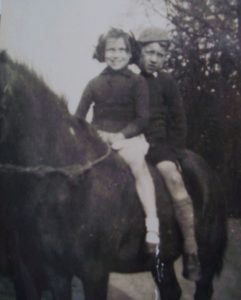

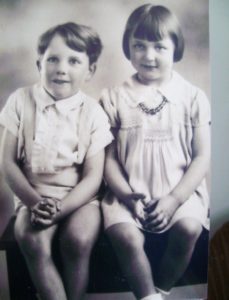


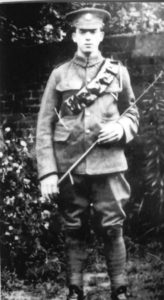
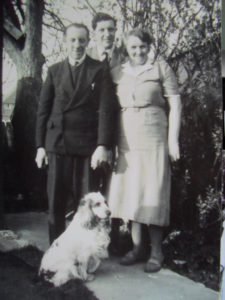
My dad with crop and riding boots was in the 1st world war 1914 to 1918. In the picture of me on my bicycle notice left hand side of the window the tape which was stuck on all of our window to stop them shattering from bomb blast.


During the Summer in the forest you had to be very careful because there were Adders which normally would be found on mounds of earth in swampy ground. My dad was bitten by one when picking primroses in a hedgerow. In the fields there were lovely coloured grass snakes up to 5ft long and big horse mushrooms which were delicious and would fill a dinner plate. There are 3 ponds. Roost Hole is the largest and aptly named because of the birds that nest on it. Coots and Moorhens for example. Moorhens lay many eggs which are very tasty when fried. Black Bottom was aptly named because it was very deep. I would catch large perch which had a sweet taste and being on Ration Cards during the war it was a nice addition at dinner time. The other was Dry Pond aptly named because in summer it would completely drain out into a river. Mufty being a Springer Spaniel loved this pond and would swim out and catch sticks and often swim across it. My dad was in the first world looking after the horses. He spoke little about it but I remember on one occasion him telling me that an Officer once told him to take great care of them because they were very hard to come by whereas men could easily be replaced. During the second world war he was an Air Raid Warden which was written on our front door. Every window in our house was covered in tape to stop them from smashing if any bombs fell. At home in addition to my Mum, Dad, Jimmy, Angela my adopted sister and me, my mums sister Auntie Con came down from Croydon to escape the bombing with my cousins Reggie and Jean making 8 of us in a 2 bed roomed house. We did have an asbestos shed at the bottom of the garden with 2 beds which we used. If any bombing raids were imminent we children would sleep downstairs in a Iron Morison shelter. When we visited my Auntie Ethel and Uncle Bert in Hove if there were air raids we would sleep outside in an Anderson shelter which in winter was very cold. My uncle Bert was a double Decker bus driver and we often saw him in a white jacket driving his bus.
Auntie Ethel at one time had Canadian troops staying with her and she told me to call them Uncle. It turned out later they were in one of the most controversial raids of the 2nd World War. On 19thAugust 1942 two years before D Day thousands were sent across the English Channel in a raid on the French port of Dieppe. Air supremacy had not been secured and the town was hemmed in by tall cliffs and could only be reached by long open well fortified beaches. The result was carnage and these beaches were turned into killing grounds as the troops came ashore. Whole battalions were cut to pieces. There were 6,080 troops involved and 3,623 of them were either killed, injured or taken prisoner. At the time we were not aware of this and prey they were some of the lucky ones.
I remember walking to school every day with a gas mask strapped on my back and being given a small bottle of milk which in winter would be icy and I would put it on a radiator in the classroom. In summer the birds would peck the tops off. My brother and I shared an upstairs bedroom and our window looked out on the route to London taken by the German V2 Rockets nick named Doddlebugs. At night they had a distinctive roar and a big red flame at the back. If the noise stopped it must have been very frightening. Sometimes chasing them were Spitfires trying to shoot them down over St Leonards forest.
Near to our house was a private school for girls called Herons Gyll with very large grounds. At the bottom was a small river and on its bank I dug a cave with a concealed hole on top for air. I used to keep food in it. My childish idea being if the Germans invaded I could hide from them but what had been just fields was now a large housing estate and would have been impossible to find. The school had also had been knocked down.
One day I was scrumping apples in a big garden when somebody saw me and I made a dash for it tripping over a wired fence and gashing my right leg in two places. Gillian always played at being a nurse(later on she became one) and bandaged it up because I didn’t want my mum to see it knowing she would tell me off, but she found out the next day and called a doctor who immediately put stitches in. I still have the scars as a reminder. On another occasion I was rather naughty and interested to know if I put a lighted firework into a bucket of water what would happen. I had to buy my Mum a new one.
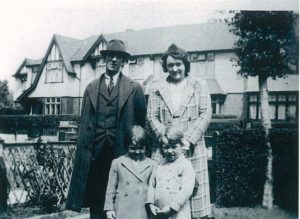
My dads business was traveling around the country side in a van to a group of customers selling goods such as paraffin, pimps (small bunches of wood)which he made up himself, soap and other household goods. He would bring home pheasants and rabbits which he had run over. Outside our kitchen window was a hook where they would hang. I have visited my old home many times and its still there. Towards the end of the war an Army lorry smashed into his van and it was a complete write off. He once again reunited himself with horses and bought one with a cart from Mr Lee who was nicknamed Flicker and lived down the road and he named the horse after him. Both Gillian and I would ride him but not far as we had no saddle. However one day he bolted outside our house and Dad tried to jump the fence to catch him and broke his leg. My brother Jimmy aged 15 took the reins literary with a friend called Norman who lived just around the corner from us and carried on the business in the evenings and Saturday afternoons for 4 months. He was very good at this and had found his niche. During the war you were allowed to grow vegetables anywhere even on the roadside. Jimmy had one on the main Brighton Road conveniently next to a small river. We always had a good supply in the growing season and none were ever taken. After his National Service which was compulsory in those days he carried on selling goods for Ciba in Horsham and Shippams in Chichester. When my dads leg was fixed he decided his horse and cart were over and bought a second hand Austin and became a Taxi Driver. My cousin Jean below with me and my Mum and Dad remember when we were going to Brighton seeing the road through a hole in the bottom of it!
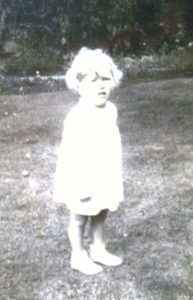

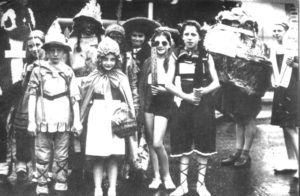
AFTER THE WAR VICTORY DAY PARTIES

From the age 11 to 16 I went to Collyers Grammar School in Hurst road Horsham. It was set up by Richard Collier a prominent member of the Mercer Company in 1840.Originally it was a house in Horsham with 60 pupils and in 1840 the main school was built. It was unfortunate that Collyers wife when he died married another Mercer Robert Pasrkinton which did not last long and after 1 month on Monday 13thhe was shot while crossing Cheapside on his was to early Mass at the Mercer chapel.
After the war what I remember so well was when the beaches had been cleared of mines my Mum and Dad took me to Ferring and I had my very first swim in the sea.


When I was eleven I passed the exam to enter Collyers Grammar School and in the fourth term I was in the School play Androclese and the Lion .The following picture and copy of the report were in the local Horsham paper. Although Collyers School Drama Clubs choice for their Autumn production of Mr. G. Shaws “Androclese and the Lion” may have seemed a little ambitious the performance in the School Hall on Thursday, Friday and Saturday showed it was not beyond their scope. The play was well produced and well acted and the story of the tailor and condemned by Caesar with other Christians to the wild beasts, only to emerge unharmed with the Lion sent to attack him, from whose foot he had removed a thorn was charmingly presented. It is no possible reflection on the excellent playing of Androclese by C.Neville, if the “hit” of the play is accorded to M.L.Dinnage as the lion subdued by the tailors kindness from great ferocity to complete surrender dancing with his benefactor to the ballet music “Les Sylphides.” Also effective was the performance of the Dramam club Secretary B. Arrow, as Ferrovius another condemned Christian whose single handed devastation among the Roman Gladiators in the arena brings about a change of heart in the Emperor. (J. A. Forester).

I still remember all the verses of the school song which we would sing in the Odeon cinema at prize giving. It started, “In Collyers school it is our rule to sing our worthy founders fame. From north to south and east to we‘ve kept the lamp he lighted burning and ere the Collyers boys forget the noble lessons Collyer set of piety and learning. I am a member of the Old Collyerian association and receive their News Letters.
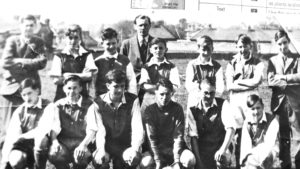
From the age of 12 to m14 I was in a group of boys called Eddies Juveniles obviously run by him. We would give displays of Gymnastics in various halls around Horsham. We would practice once a week in a Gym next to the police station. One of my favourite memories was in the summer going haymaking in a large field at the bottom of our garden. Alas that field was soon to become a large Council Estate which was badly planned because there was a road at the top of the long field consequently all the houses had massive long gardens which used to back onto our house. Most of them were an eyesore because they were never attended and were just a mess of weeds and overgrown grass. My mum was always telling me off for wearing out so many shoes .I was obsessed with all sports and would play football on the streets and in the Town Hall square using the big entrance door as goal.
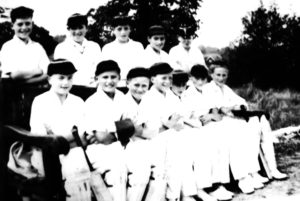
I also played cricket with a wicket painted on my dads garage which was situated on one side of a road and we would bowl at it from the other side making sure no traffic was coming .My favorite sport was Eton Fives possibly because of my large hands and would on occasions play with Mr Thorpe the headmaster.
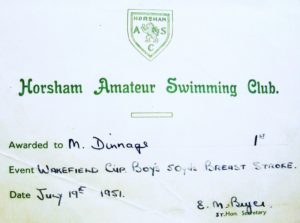
This eventually led to my favorite game Squash which I played throughout all my career overseas. My last game was in Oman when I was 59 and my overseas life came to an end. At school I won the Mcknown cup for the junior cross country, the Wakefield cup for the 50 yards Breast stroke and came first in the Horsham Schools High Jump. I also played cricket for the under 13 and football for the church choir team.
From the age of 14 I would go up to London by train with my Uncle Ernest who was a Solicitor and had his office in Stoke Newington. I was amazed at the number of divorcé cases he was dealing with.He would take me to the Oval to watch England playing cricket and Tottenham to watch football and on occasions took me to the Elephant and Castle which was some years back had been owned by a great aunt of mine. He lived with his sister who gave me piano lessons and extra Latin classes. This was to help me stay in the A grade at school. His long time intentions were for me when I left school was to join him in his business and eventually take it over when he retired.However this was not to be but two of my school friends Ron Flowers and John Glashier did and Ron eventually became a Barrister.
I had a school friend who was always boasting about joining the Royal Navy as an Artificer. He went for an interview and was very upset when he failed. In my family history there is no record of anybody being in the RN all had been in the Army mostly associated with London Regiments. I was about to change that and sent away for a brochure. Immediately I knew this would suit me especially as I was good with my hands and would often help my dad out if he had problems repairing his van. I went for an interview and passed but had to wait 3 months before I started so I went to work on a pig farm and would ride my bicycle up to Faygate a small town on the road to Crawley. The owner told me I was rather over qualified for this job but took me on as a temporary laborer. I really enjoyed this cleaning and washing down the pens. I was surprised how clean the pigs were. They always messed in one place making it easy for me to keep them clean. When it rained I would shelter in the pen with them. When the pigs had just been born they were castrated. It was amazing because immediately these parts were thrown out of the pens all the chickens would fight over them. An extra bonus was taking home fresh eggs and the occasional chicken. In that very short time I learned a lot about the behavior of pigs.